1. Share skills and interests during onboarding
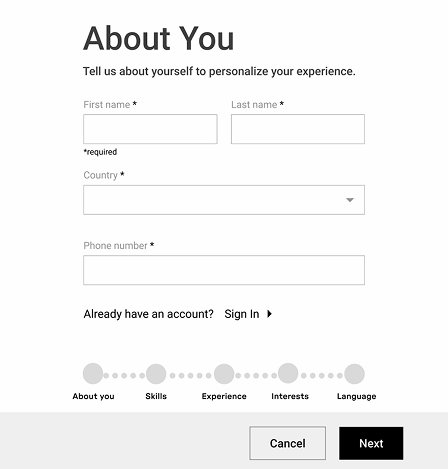
Designers can share their experience, interests, and preferred language. A progress indicator shows which step they’re on and how many are left.
Explore onboarding questions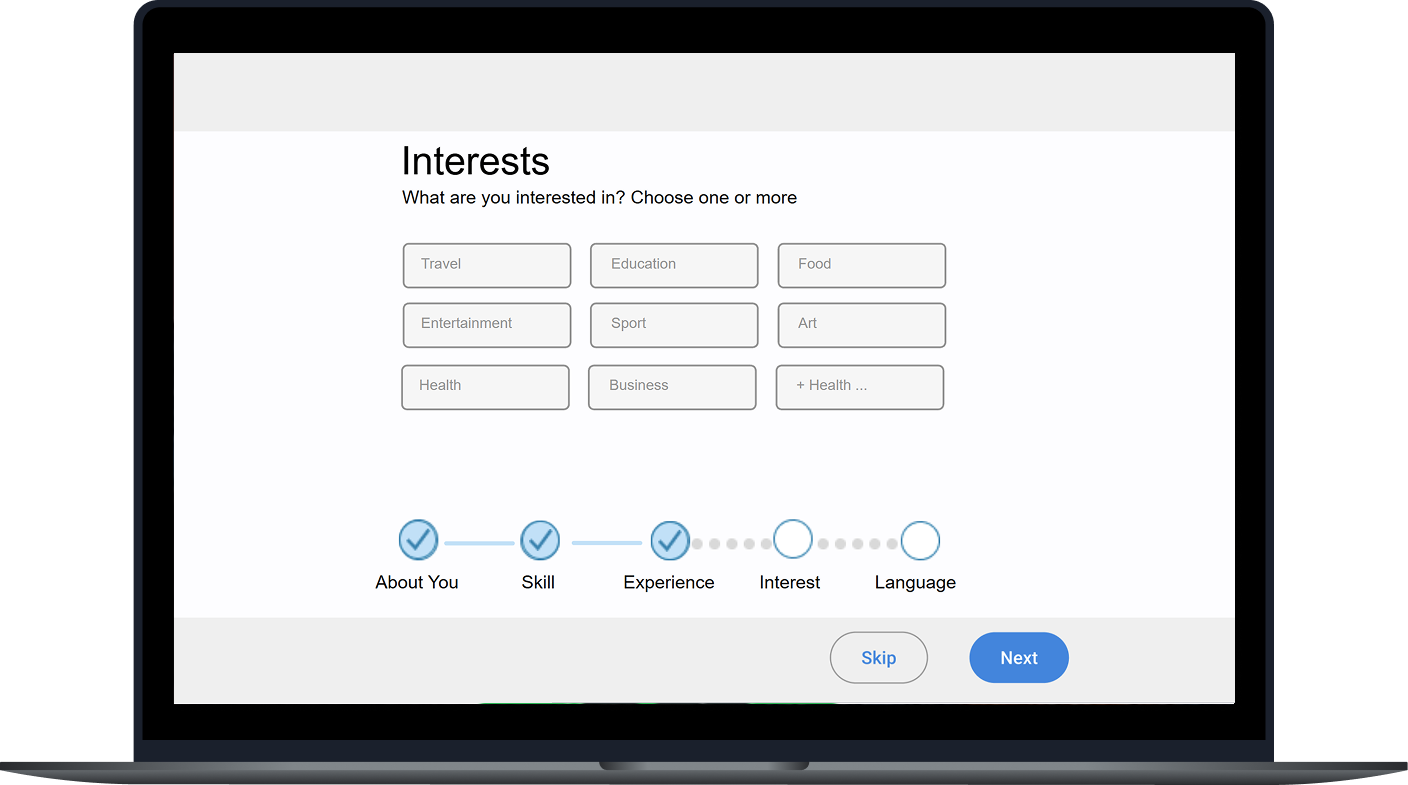
Helping designers connect and grow through gamification
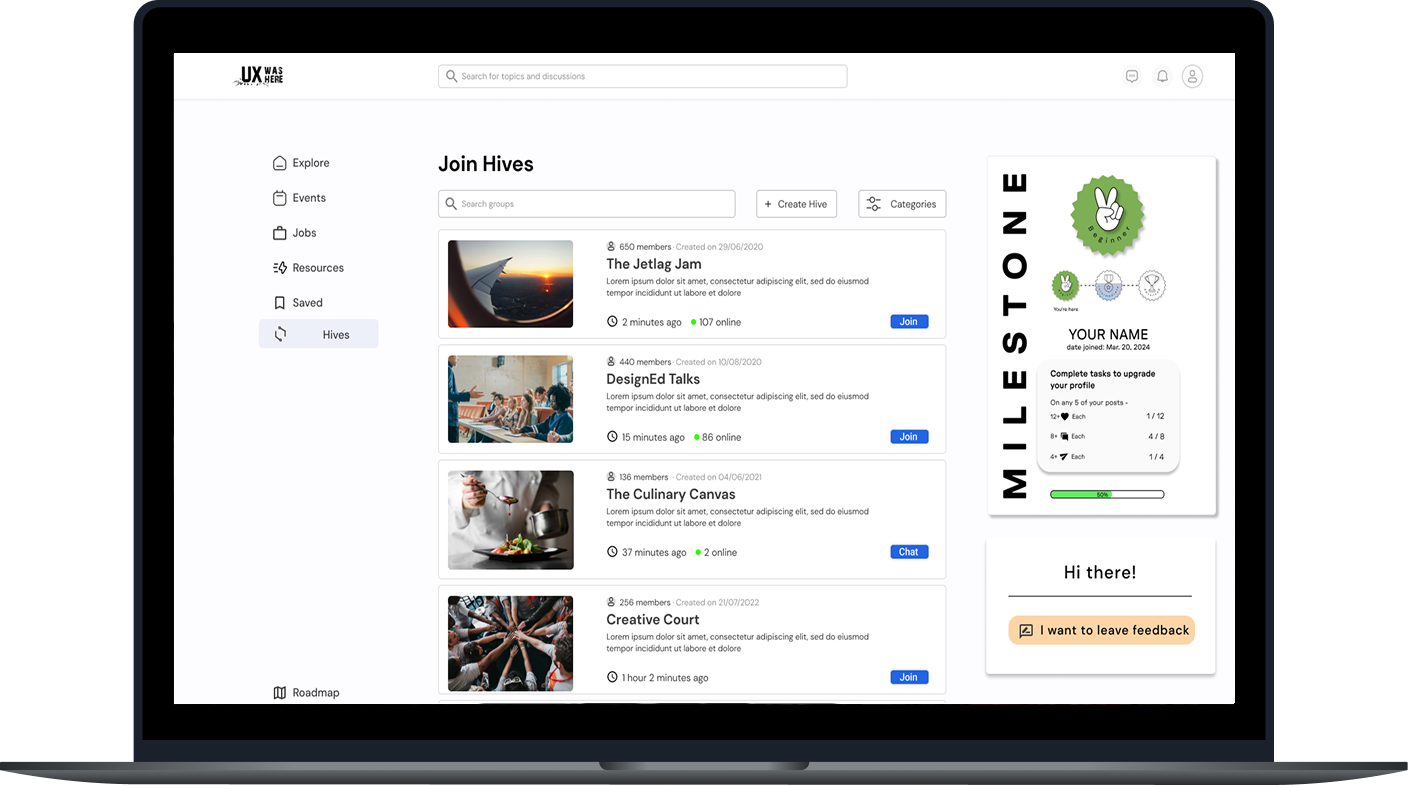
The client wanted to give designers a reason to be active in the community. The goal was for designers to return for feedback on their work and connect with people who shared their interests.
I worked on a team of four from research through prototyping. I helped survey design students about what they wanted from the community. In Figma, I designed milestones that showed users their progress and what they could unlock next. In ProtoPie, I prototyped how users set up a profile and joined clubs that matched their interests.
Jump to the prototypeThe client wanted designers to stay active in the community by asking questions and supporting each other. We saw an opportunity to help them connect between events through Hives, where shared interests could spark a conversation. In addition, designers could work toward three milestones and unlock portfolios to learn how others present their work.
The redesign helps designers meet people who share their interests. Access to other designers’ portfolios gives them a goal to work toward as they take part in the community.
Designers can share their experience, interests, and preferred language. A progress indicator shows which step they’re on and how many are left.
Explore onboarding questions
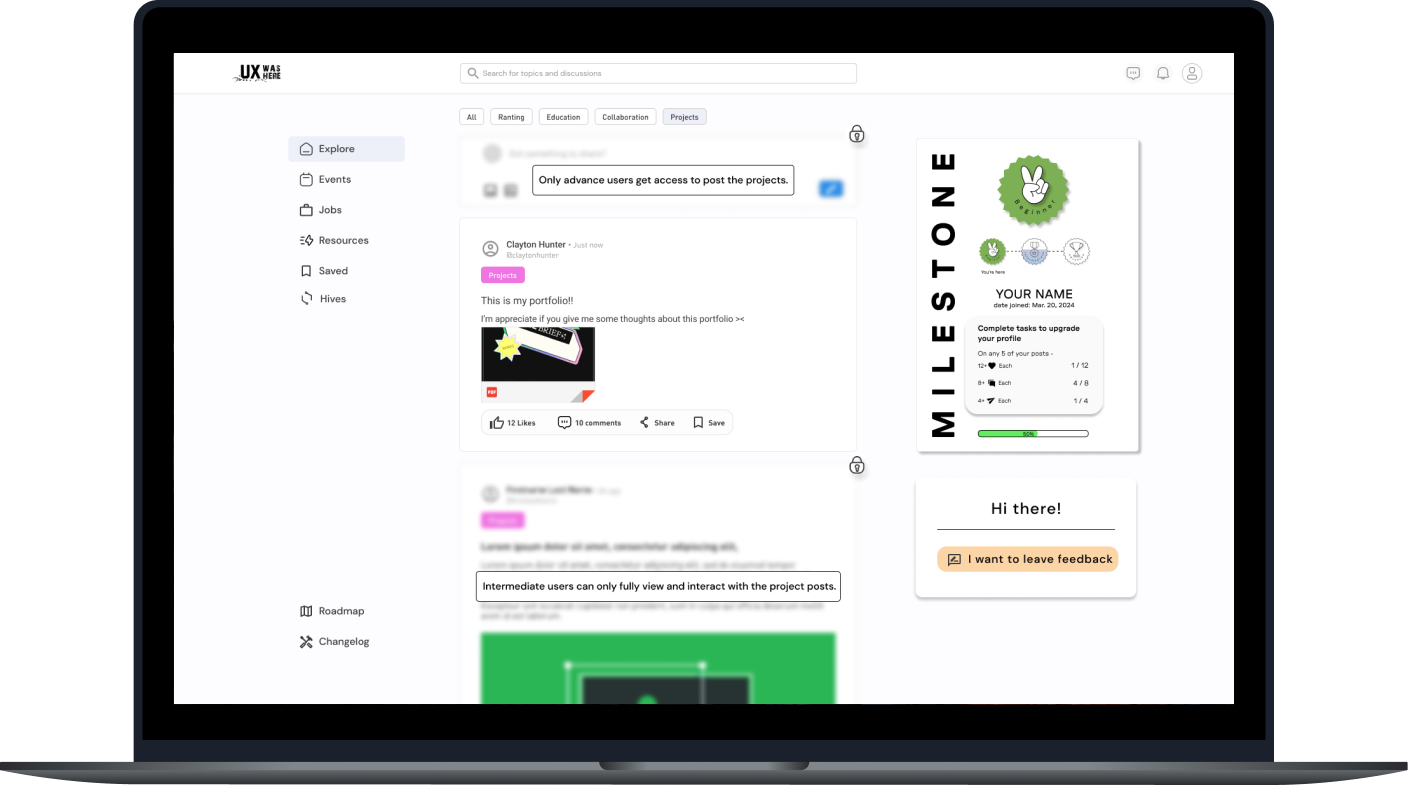
I used gamification to give designers a goal to work toward. Designers work toward their next milestone by engaging with posts across the platform. Once they reach all three, they can explore other designers’ portfolios.
See how gamification works
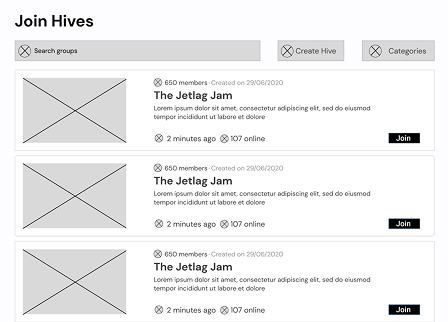
Hives are clubs built around shared interests like travel or student life. Designers can join a club to share a post or start a conversation.
Explore Hives
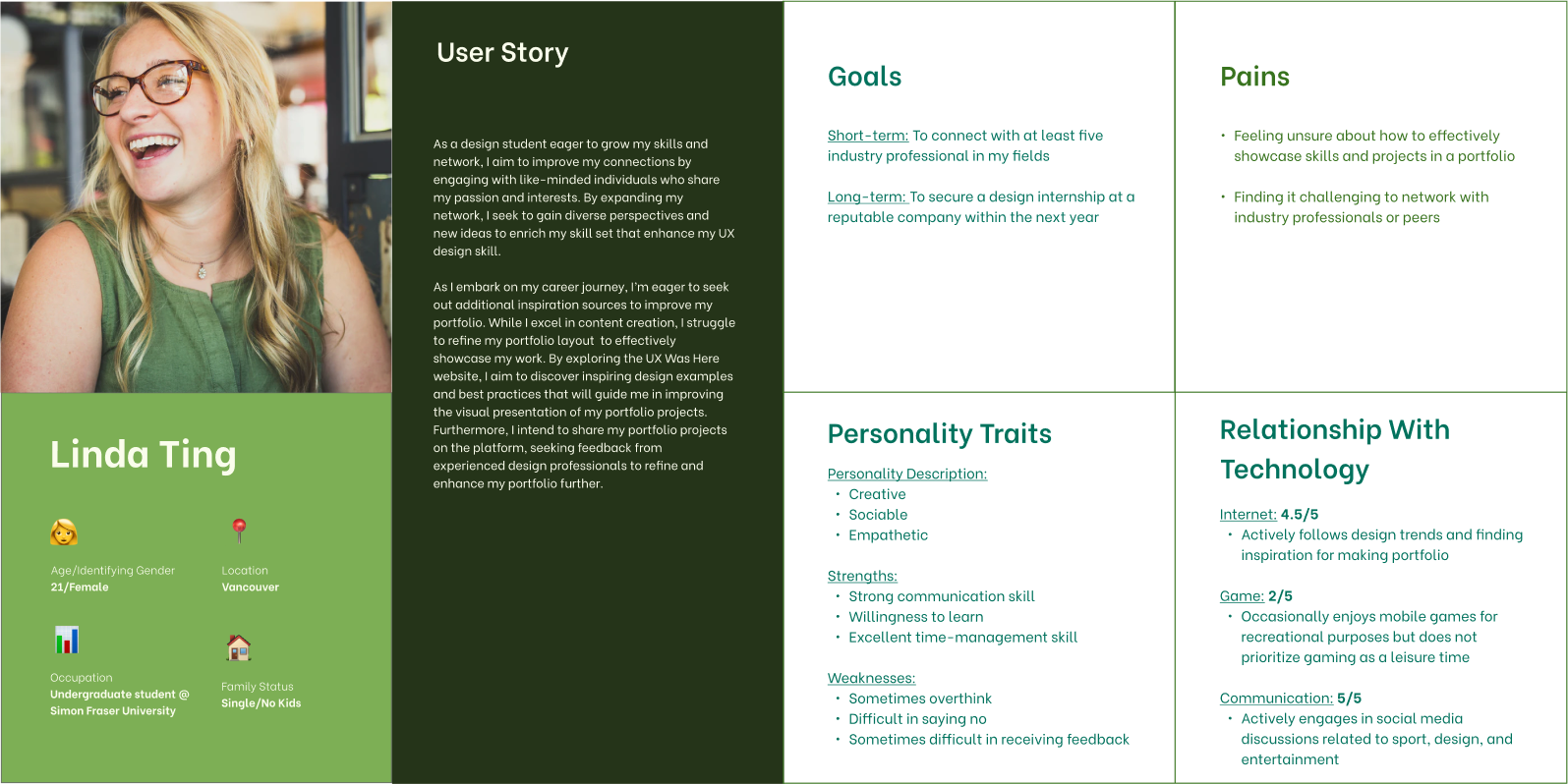
I helped our team create the survey through Google Forms and invited a few university design students to take part. We shared the survey through Discord and received more than 60 responses.
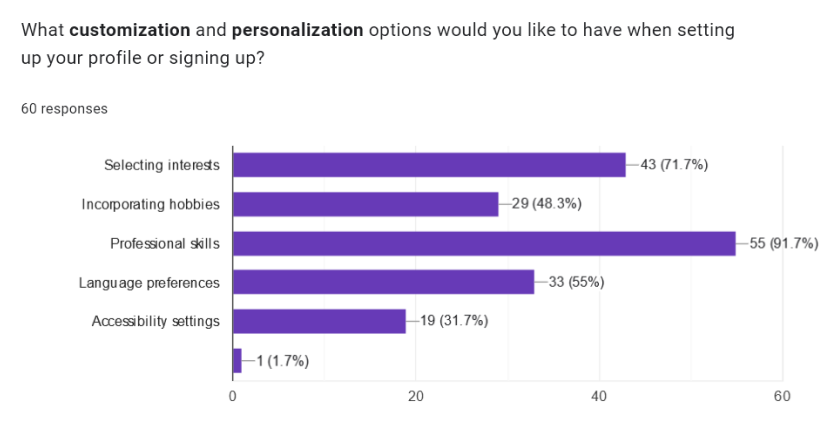
About 92% chose professional skills, 72% chose personal interests, and 55% chose language preferences. We added all three to onboarding.
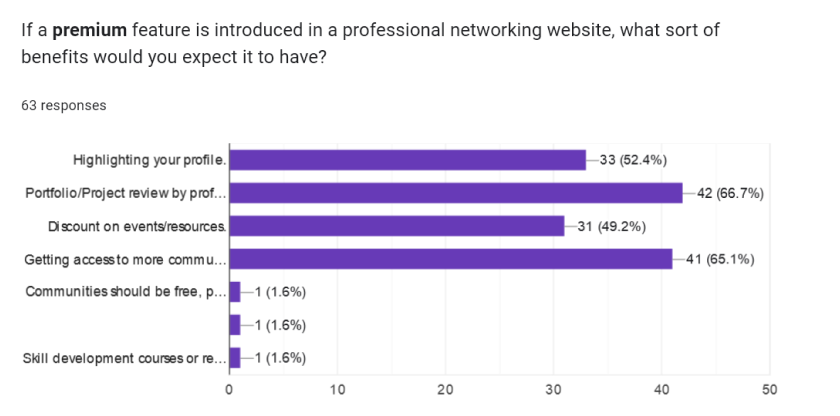
Two-thirds wanted professionals to review their portfolios or projects. This showed us how much students valued feedback on their own work.
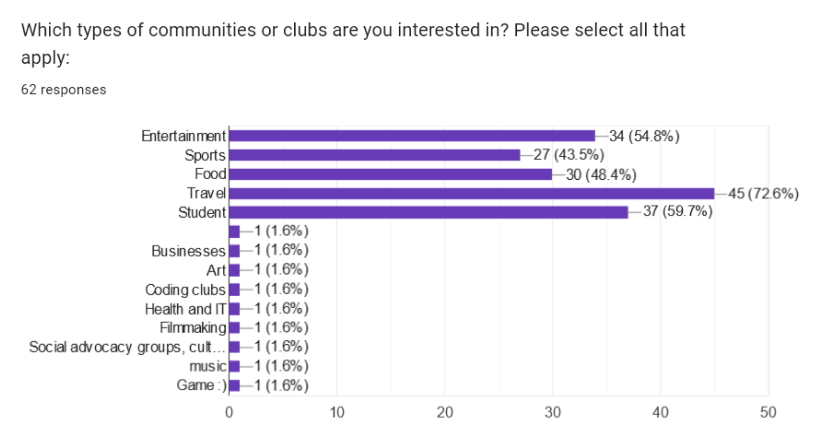
Travel was the top choice (73%), followed by student activities (60%) and entertainment (55%). We used these topics as categories in Hives.
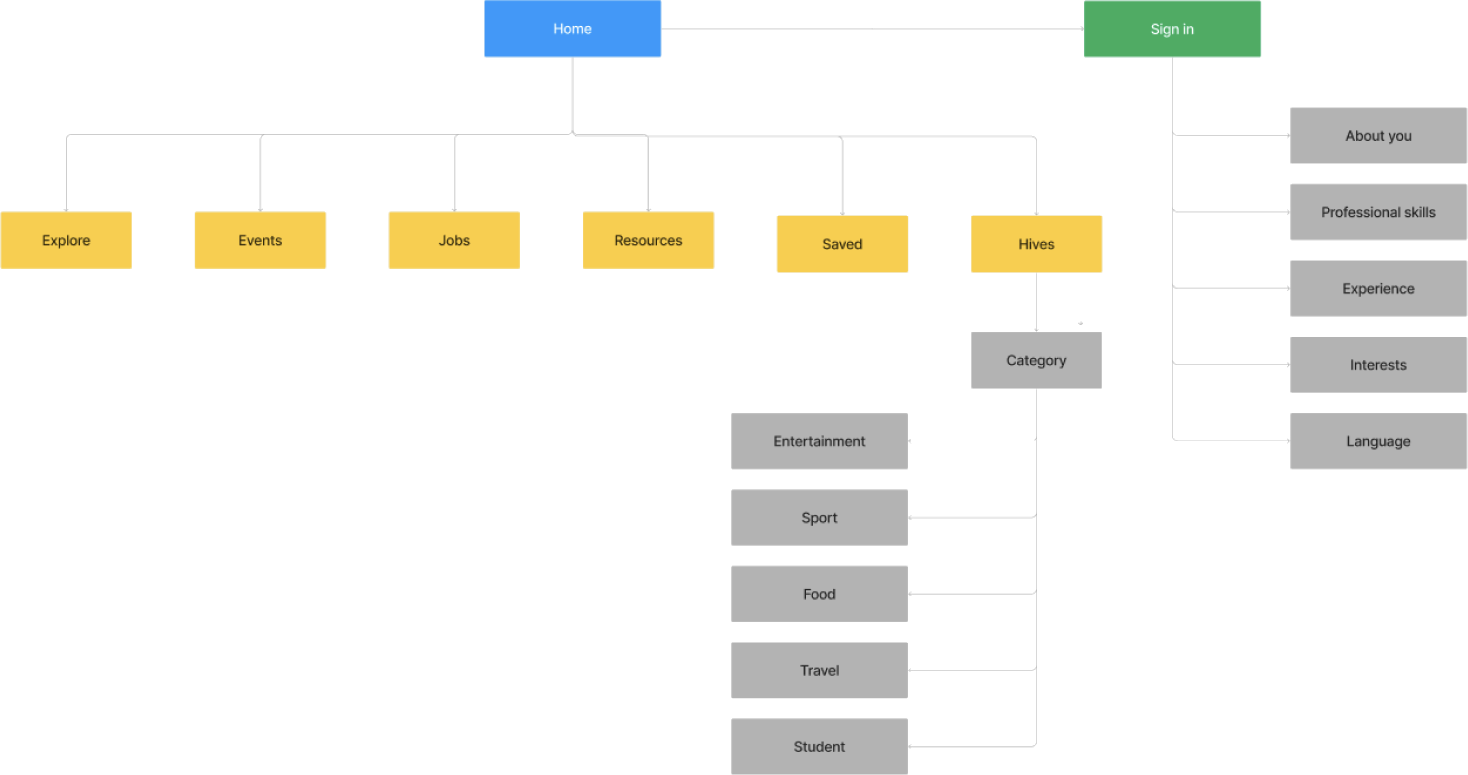
We asked designers what they do, what they enjoy, and which language they prefer. We grouped the questions by topic so they wouldn’t feel overwhelmed. I added a progress indicator to show how many steps were left.
Our survey showed that students were most interested in travel, student activities, and entertainment. Therefore, I made these the club topics so designers could talk about things they’re passionate about.
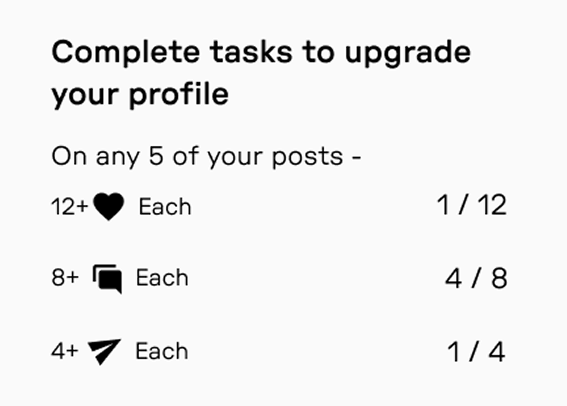
Clear, specific goals can help people stay motivated [1]. So I added a short task list that shows designers what to do next, such as getting likes, comments, and shares on their posts. Each completed task moves them toward the next milestone.
People tend to put in more effort as they get closer to a goal [2]. So I added a progress bar and badges to show designers how far they’ve come, from Beginner to Advanced.
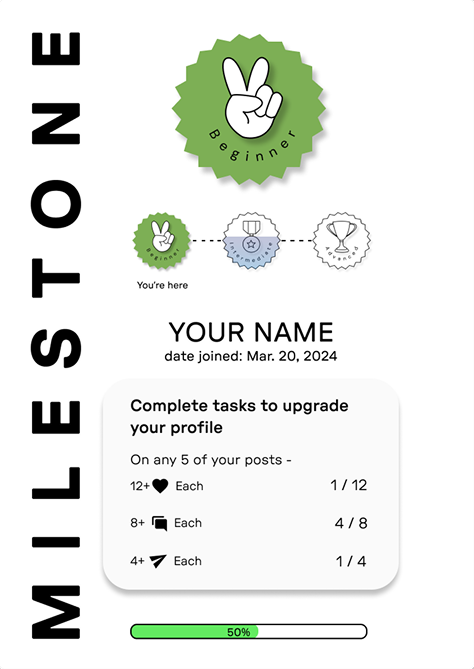
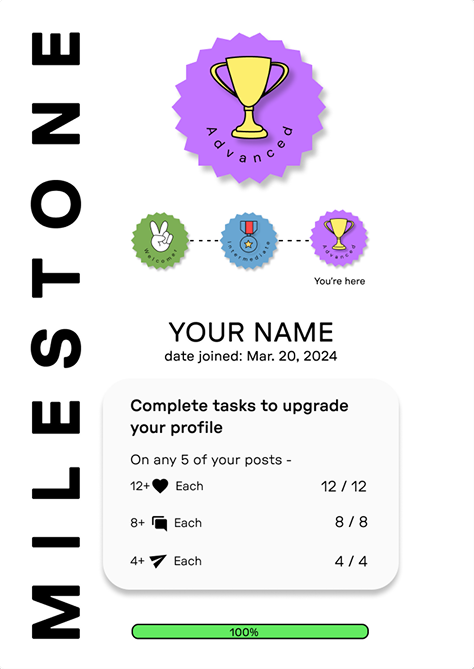
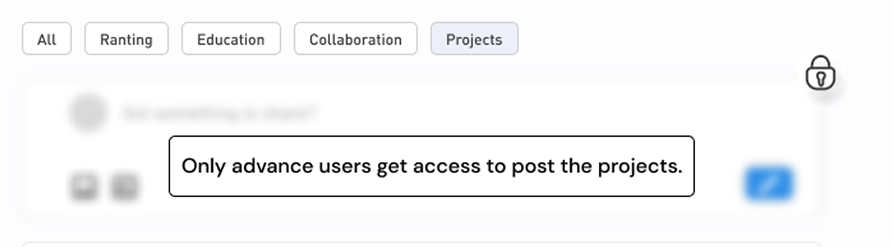
In our survey, two-thirds of students wanted professionals to review their portfolios. Therefore, designers who reach the Intermediate milestone can view and interact with project posts. Those who reach the Advanced milestone can post their own projects for feedback.
I used ProtoPie to show how designers set up their profiles and take part in the community.
Designers set up their profile by sharing their skills, interests, and preferred language.
Designers can join clubs in Hives, write a post, and give feedback. They can check their progress on the milestone card beside the feed.
The founder's feedback taught me not to rely on a survey alone. Surveys show what users prefer, but I also need interviews and user testing to understand their reasoning. [4]
Gamification on a professional platform works best when rewards connect to career growth. I wanted each milestone to show designers how they were making progress toward a career goal.
I learned that clear project goals help a team stay focused under a tight deadline. Dividing tasks based on each person’s strengths helped us finish our design on time.
The founder found it unclear how our survey findings led to our design. My next step would be to interview students to understand their experiences in more detail. This would help me explain the reasoning behind each feature more clearly.
The founder suggested testing the prototype with users. I would test the milestone card with design students to see if they understand how to unlock the next milestone. If they get stuck, I would find out what confused them and revise the card based on that.
The founder questioned why designers would return after completing every milestone. My next step would be to explore other activities, such as weekly design challenges or group mentor sessions. I would then test them with students to see which ones keep designers coming back.
[1] Locke, E. A., & Latham, G. P. (2002). Building a practically useful theory of goal setting and task motivation: A 35-year odyssey. American Psychologist, 57(9), 705–717. https://doi.org/10.1037/0003-066X.57.9.705
[2] Kivetz, R., Urminsky, O., & Zheng, Y. (2006). The goal-gradient hypothesis resurrected: Purchase acceleration, illusionary goal progress, and customer retention. Journal of Marketing Research, 43(1), 39–58. https://doi.org/10.1509/jmkr.43.1.39
[3] Rajkumar, K., Saint-Jacques, G., Bojinov, I., Brynjolfsson, E., & Aral, S. (2022). A causal test of the strength of weak ties. Science, 377(6612), 1304–1310. https://doi.org/10.1126/science.abl4476
[4] Rohrer, C. (2022). When to use which user-experience research methods. Nielsen Norman Group. https://www.nngroup.com/articles/which-ux-research-methods/